Ways to organize assets
Eagle vs Pinterest:
How are these two inspiration tools different?
And which should you choose?
Pinterest helps you discover more possibilities. Eagle helps you keep the finds that are worth keeping.
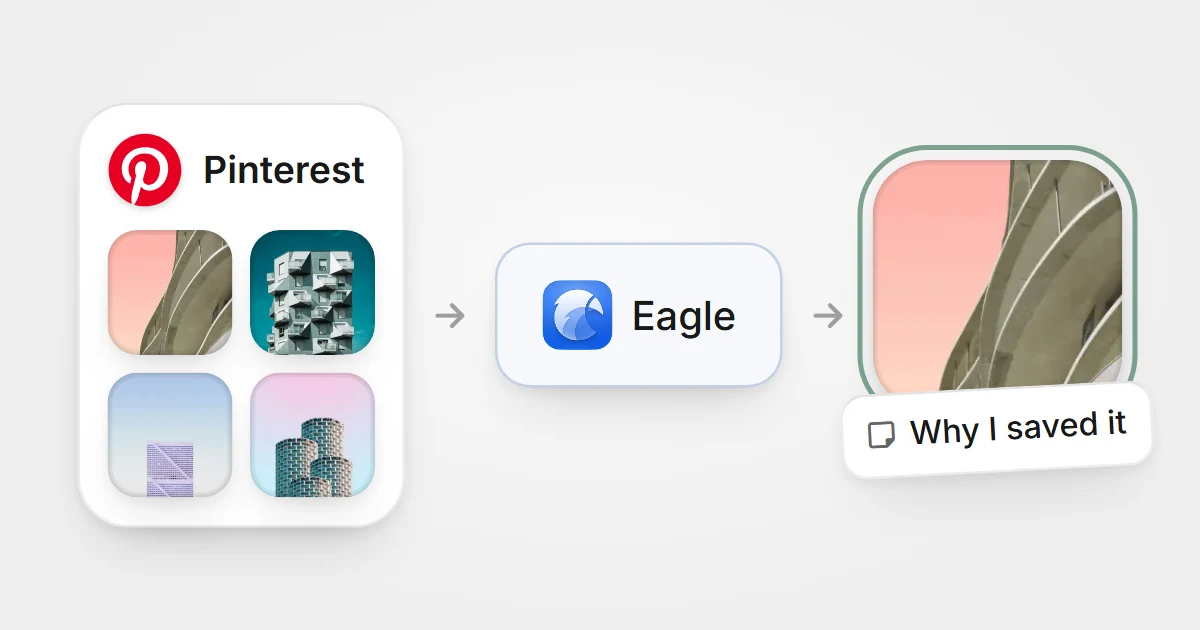
You don't have to leave Pinterest to start using Eagle.
You're working on key visuals for a brand campaign and want 3D lettering to be the star. You open Pinterest and search for "3D typography." Starting from one piece of glass lettering, you end up looking at brick letters, chrome numbers, grass-textured type, and a few material studies that are great references for lighting. By the end of the afternoon, you've saved dozens of images.
A few months later, another project calls for a similar glass look. You remember saving a piece of clear 3D lettering on a white base against a dark green background, but you can't remember which board it's on. You'd also like to compare it side by side with the fonts on your computer and the material photos you shot yourself.
At this point, the question is no longer "How do I find inspiration?" It's "How do I manage the inspiration I've already found?" Eagle and Pinterest can both save images, but they mainly solve different problems.
01 Different jobs
Do Eagle and Pinterest really solve the same problem?
Pinterest is a visual discovery platform. You search for a term or open an image, and it recommends more similar work based on what you've viewed and saved. What it does best is show you things you didn't know about.
Eagle is an asset management app that runs on your computer. You add images, videos, fonts, and other files to your own library, then organize and find them again with folders, tags, and a range of filters. It doesn't recommend new content. It works with the things you've already decided to keep.
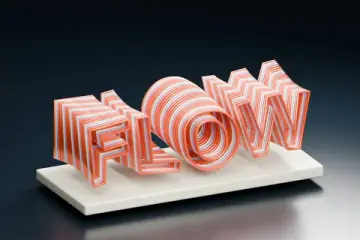




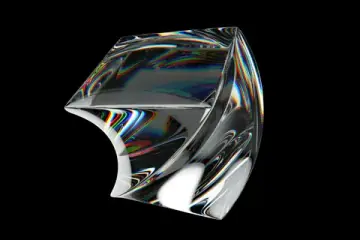



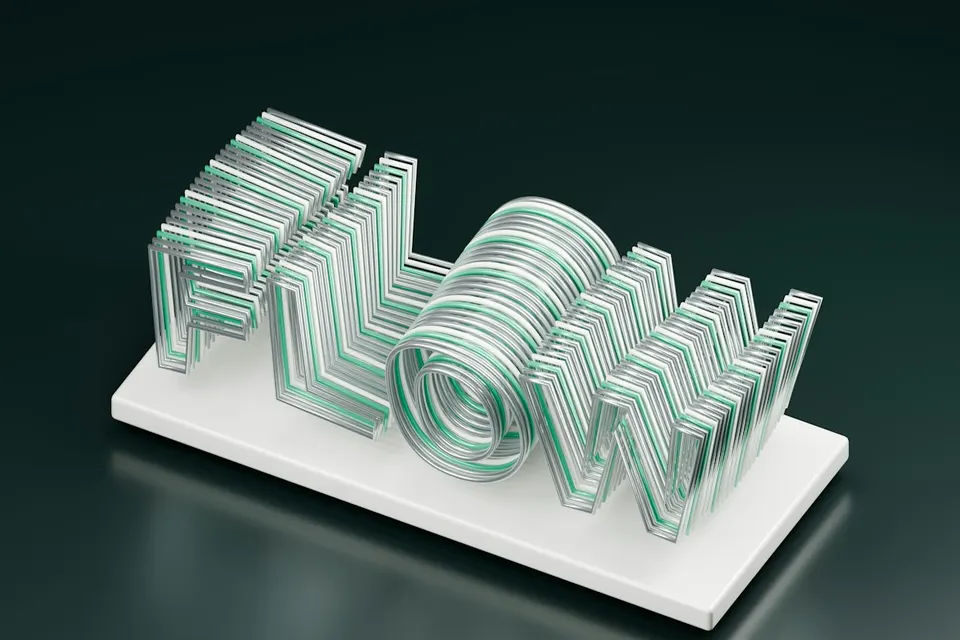
One is for finding, the other is for keeping: leave exploring to Pinterest and building up your collection to Eagle.
So this article won't score the two tools. A more useful question is which stage you're in right now. Do you need to explore, or to build up a collection?
02 Discover
Finding inspiration: recommendations and discovery on Pinterest
When you're still unsure about a design direction, Pinterest is very handy. It's especially good for these things:
- Quickly browsing different visual styles. Type in a keyword and you'll see many different approaches, so you can quickly get a sense of which ones you like.
- Branching out from one image to more similar work. Open a Pin you like and similar content keeps appearing below it, so you can keep digging.
- Saving a specific theme to a board. Boards can also be split into board sections to break a theme down further.
- Using your camera to find related ideas. Pinterest Lens uses your camera to find content related to objects in front of you.
For a 3D lettering campaign, you might start with "glass 3D lettering," move on to type made of brick, chrome, or grass, and then branch into approaches to lighting, bases, and composition. This kind of wide-ranging exploration is exactly what Pinterest is good at. Eagle doesn't need to replace it.
At some point in your exploring, though, you'll find a few references you really want to keep. The next question is how to build up those finds over the long term.
03 Save
Saving inspiration: how is saving on a platform different from saving on your own computer?
Both tools let you save things, but what you end up with isn't quite the same. Saving a Pin on Pinterest adds content from the platform to your board. It stays connected to the original web page, and you view it through your Pinterest account. Adding an image to Eagle saves a copy of the file to the library on your computer and records the URL it came from.
| Aspect | Eagle | |
|---|---|---|
| How you save | Save Pins to boards | Add files to a library on your computer |
| What you save | Pins and links on the platform | Images saved from the web, plus assets already on your computer |
| File types | Mainly images and videos on the platform | Images, videos, fonts, design source files, and many other formats |
| Without internet | Mainly viewed online through the website or app | Assets are stored on your computer, and most features work offline |
| Long-term storage | Tied to your Pinterest account and the platform | You manage your own library and backups |
To figure out which one you need, start with three questions:
- Do you need a link, or the asset itself? If you just want to remember that an image exists, saving it as a Pin is enough. If you want to zoom in on details or compare it side by side with other files, having a copy of the file makes that much easier.
- Will you use it in your design apps? You can drag images from Eagle into other apps, such as pulling one into Photoshop as a reference.
- Do you want to manage and back it up yourself? Pins stay with your account and the platform. A local library is something you can copy and back up on your own.
Not everyone needs a local asset library. If you only save the occasional home decor or outfit idea, Pinterest is plenty. But if what you save is part of your work, your needs are different.
Two reminders: files stored on your computer still need to be backed up, and saving an image doesn't mean you own its copyright. Before using any asset in your work, check the license yourself.
04 Organize
Organizing inspiration: how do boards compare with folders and tags?
Pinterest boards and board sections can already organize a lot of topics clearly. For example, a "Brand key visuals" board with sections for "3D lettering," "Materials," and "Lighting" is enough for many people.
But design references often have several traits at once. This piece of glass 3D lettering, for example, might be all of these:
3D letteringGlassDark greenMinimal layoutBrand visuals
If you want to find it from all five angles, with boards you'd have to decide in advance which boards to save it to, or keep splitting sections into finer and finer pieces.
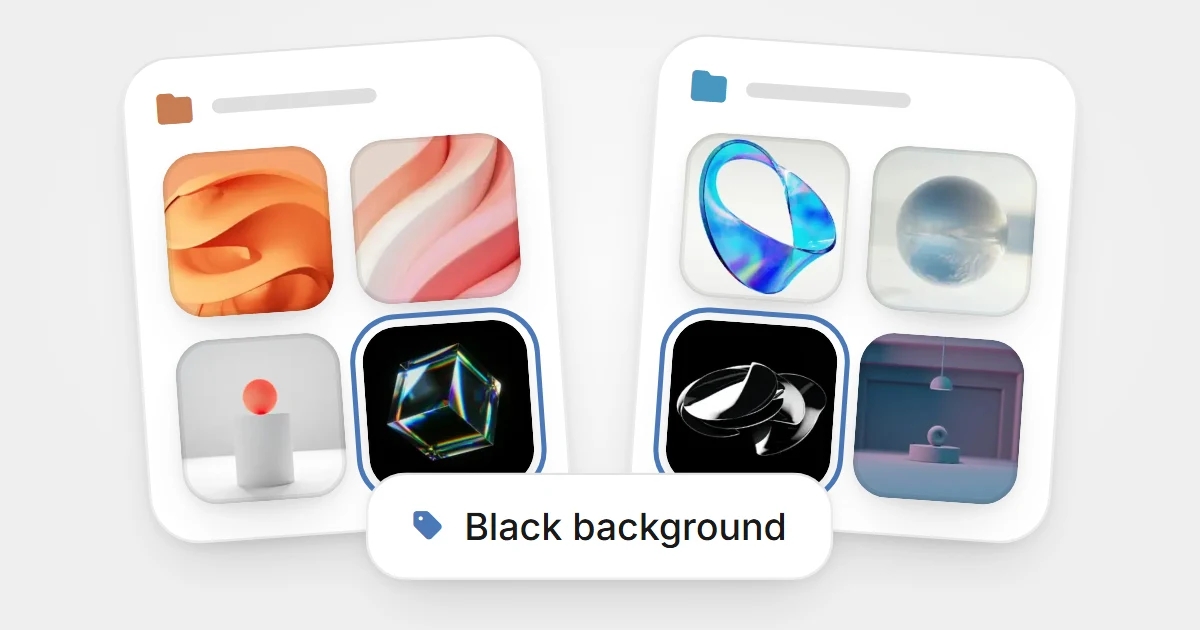
In Eagle, you can put the image in a project folder to show which job it belongs to. Then use tags to record traits like material, color, and composition, and use star ratings to mark how useful it is as a reference. Later, when you want to see every glass reference, just filter by tag. You can also save filters you use often as smart folders, so any newly saved image that matches the conditions shows up there automatically.
You don't need to learn every feature here. The point is that once your collection grows and the ways you look for images get more complex, a dedicated asset management tool starts to pay off. For how folders and tags can split the work, see "Folders or tags for your assets? When to use each, and how to combine them."
05 Find again
Finding inspiration again: exploring new images and searching your own collection are different jobs
Pinterest search is good at showing you images you haven't seen yet. You can also switch your search to just the Pins you've saved.
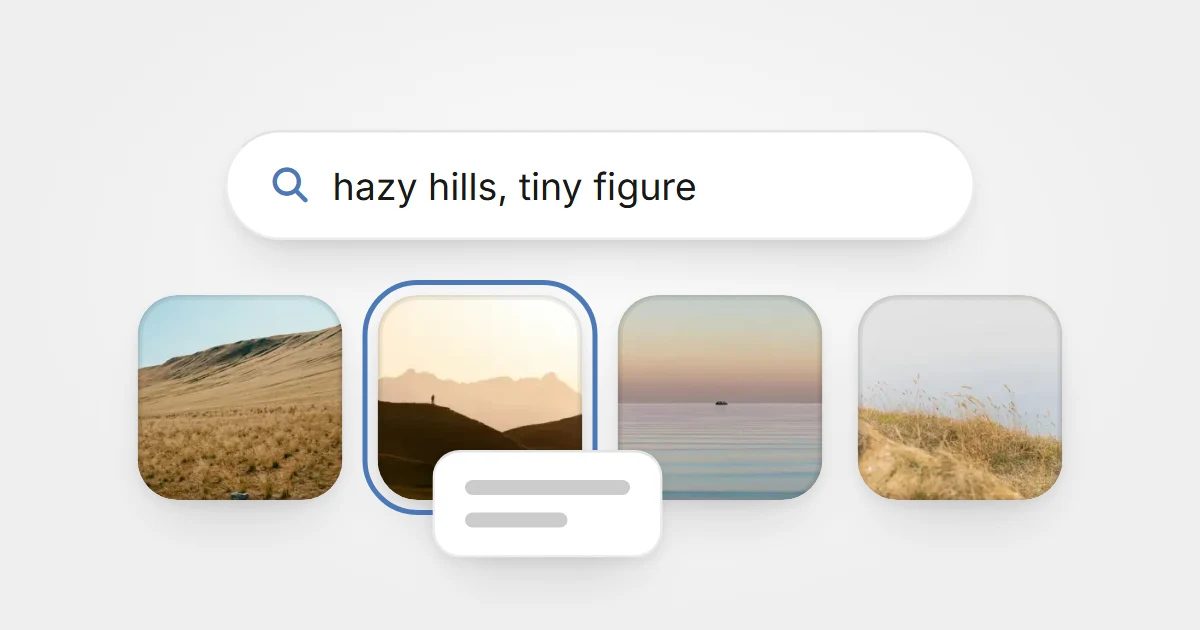
Eagle search only looks inside your library. Besides file names and tags, you can filter by color, dimensions, aspect ratio, rating, and more.
Back to the opening example: you remember saving a piece of glass 3D lettering on a dark green background three months ago, but not what it was called. If you added tags when you saved it, you can combine the dark green color with the "3D lettering" tag and narrow things down quickly.




Exploring helps you find new things, and finding again helps you use what you already have. Each kind of search has its place.
06 Use both
Using both: find inspiration on Pinterest, then build your own asset library in Eagle
For people who design over the long term, using both tools together may make more sense than using only one. Here's a complete workflow:
- Explore on Pinterest. Search for references on 3D lettering, materials, and lighting to see what visual directions are out there. Don't rush to narrow things down yet.
- Save the important references to Eagle. Use the Eagle Browser Extension to save the images you really want to keep to your library. Boards you've already organized can also be imported in bulk.
- Sort them and note what's worth referencing. Put them in a project folder, add tags for material, color, and so on, then write a one-line note about what makes each one good, such as "Clean reflections on the glass type. The base could be more subtle."
- Reuse them on your next design. When a new project starts, look for a direction in your own library first instead of going back to the search box and starting over every time.
For how to check sources and add notes on how you'll use them after importing from Pinterest, "Move your Pinterest collection to Eagle and keep your references useful" goes into more detail.
This workflow also works in reverse. After you install the Pinterest visual search plugin in Eagle, you can start from an image in your library, look for similar assets on Pinterest, and bring the results you like back.
07 Choose
Eagle or Pinterest: which should you choose?
The one-sentence answer: it depends on whether you need to explore right now or to build up a collection.
| What you need | Better fit |
|---|---|
| Find new design inspiration | |
| See more images or styles like one you found | |
| Save a small amount of inspiration from the web | Pinterest is enough |
| Manage lots of images, videos, fonts, and other assets on your computer | Eagle |
| Sort a large collection by tags, color, ratings, and other filters | Eagle |
| Browse your collection without an internet connection | Eagle |
| Explore and also organize for the long term | Pinterest + Eagle |
If you're already a heavy Pinterest user, you may be more likely to run into this: you know the value of collecting inspiration and enjoy exploring, but as your collection grows, or when you need to keep inspiration from the web alongside your work files, your usual way of organizing starts to fall short. Eagle doesn't need to replace that exploring habit. It just gives you another option for managing what you've collected.
You don't have to leave Pinterest to start using Eagle
Pinterest makes it easy to find inspiration. Eagle makes it easy to keep, organize, and reuse it.
You can keep exploring work you like on Pinterest and save the references that really matter to Eagle. The next time you start a project, you won't have to search from scratch. What you've collected over time can become the starting point for new work.
If you'd like to try it, Eagle offers a free 30-day trial with all features included. If you decide to buy, it's a one-time purchase with no subscription. Try organizing the references for one project first, then decide whether you need it based on how much you collect.